Manual Wheelchair Accessories That Improve Daily Comfort and Utility
Key Takeaways
- Cushioning is Critical: A high-quality pressure-relief cushion is the most important accessory for long-term health and skin protection.
- Storage Solutions: Specialized bags and trays allow users to carry essentials while keeping their hands free for propulsion.
- Ergonomic Handrims: Upgrading your handrims can significantly reduce the strain on your carpal tunnel and finger joints.
- Weather Protection: Specialized ponchos and canopy systems ensure that medicare approved manual wheelchairs remain functional in all seasons.
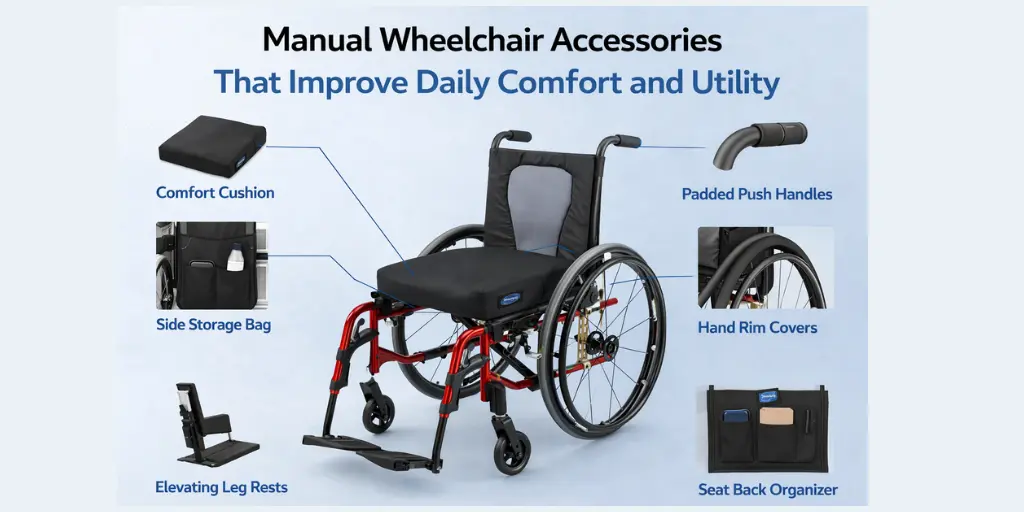
Customizing your chair is a proactive way to reduce the physical toll of self-propulsion. While a manual wheel chair is designed for movement, the repetitive nature of pushing can lead to fatigue or joint pain over time. By selecting accessories that optimize your grip, support your back, and manage your daily carry items, you can extend your endurance and navigate your environment with significantly less effort.
Comfort and Postural Accessories
The primary goal of comfort accessories is to distribute your weight evenly and provide a stable base for your spine.
1. Specialized Seat Cushions
A standard foam pad is rarely enough for full-time users. Options like air-cell (ROHO) cushions, gel-infused foam, or honeycomb polymers provide advanced Wheelchair Positioning and Skin Protection. These materials “immse” the user, moving pressure away from the tailbone and onto the thighs.
2. Padded Armrest Covers and Side Guards
Standard plastic armrests can cause “Ulnar Nerve” pressure over time. Memory foam armrest covers provide a soft surface for the forearms, while side guards prevent clothing from rubbing against the tires and getting caught in the spokes.
3. Backrest Extensions and Lumbar Support
If your chair feels like it’s “sagging,” a rigid backrest insert or an adjustable tension upholstery kit can provide the lumbar support needed to keep your spine in a neutral position, preventing the “slump” that leads to back pain.
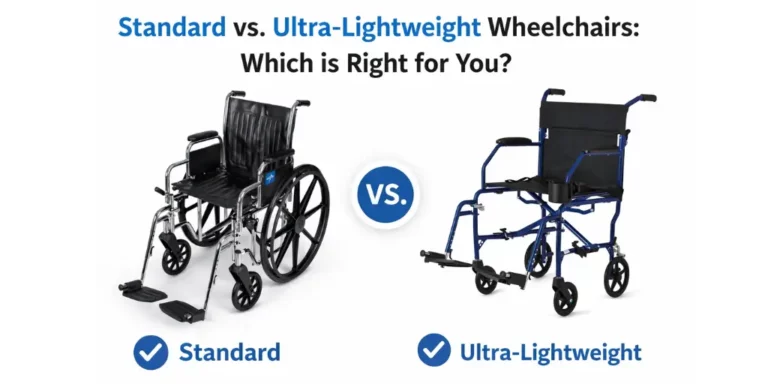
Read this blog to compare Standard vs. Ultra-Lightweight Wheelchairs and see which frame is right for you.
Utility and Performance Add-Ons
Utility accessories focus on making the chair easier to use and more practical for a busy lifestyle.
1. Ergonomic Handrims
Standard round metal handrims require a tight “pinch” grip, which can lead to arthritis or tendonitis. Ergonomic handrims (like the Natural Fit or Surge) have an oval shape that fits the palm of the hand, allowing for more power with less gripping force.
2. Under-Seat and Back-of-Chair Bags
To maintain the balance of a manual wheel chair, heavy items should be stored in an under-seat “net” or a low-slung backpack. This keeps the center of gravity stable and prevents the chair from tipping backward.
3. Push Rim Covers
For users with limited hand strength, silicone push rim covers provide “tackiness,” allowing the user to push the chair using only the palms of their hands without needing to grip the rim at alls.
Manual Wheelchair Accessory Maintenance Checklist
To ensure your manual wheelchair customization remains effective and safe, follow this routine maintenance schedule for your accessories
| Accessory Item | Maintenance Task | Frequency |
|---|---|---|
| Seat Cushion | Check for “bottoming out,” inspect cover for tears, and ensure proper positioning. | Daily |
| Ergonomic Handrims | Wipe down to remove oils/dirt and check for loose mounting bolts or scratches. | Weekly |
| Cushion Cover | Machine wash (delicate) or wipe with disinfectant to prevent bacteria buildup. | Weekly |
| Storage Bags/Trays | Check attachment points (Velcro/clips) for wear and clean out internal debris. | Monthly |
| Backrest Upholstery | Check for sagging or frayed edges; tighten tension straps if applicable. | Monthly |
| Axle/Caster Bearings | Remove hair or lint buildup from axles and apply a drop of silicone lubricant. | Monthly |
Does Medicare Cover Accessories?
When patients ask, “Does Medicare cover wheelchairs and their add-ons?”, the answer depends on “Medical Necessity.”
- Covered: Medicare often covers cushions and backrests if your doctor documents a risk of pressure sores or a postural deformity.
- Not Covered: Items like cup holders, backpacks, or decorative spoke guards are considered “comfort or convenience” items and are usually an out-of-pocket expense.
- Documentation: To get accessories for medicare approved manual wheelchairs, your therapist must include them in the original Standard Written Order.
FAQ: Manual Wheelchair Customization
Q1: Will adding accessories make my chair too heavy to push?
A: Most modern accessories are made of lightweight polymers or carbon fiber. While adding a heavy bag will affect propulsion, items like ergonomic handrims actually make the chair feel lighter because they improve your mechanical advantage.
Q2: Can I add power-assist wheels to my manual wheelchair?
A: Yes! Power-assist wheels (like the SmartDrive or E-Motion) are the ultimate accessory. They replace your standard wheels and provide a motorized boost every time you push, which is excellent for long distances or hills.
Q3: Are there specific accessories for winter?
A: Yes. Look for “wheelchair tires with tread” for better traction on snow and “hand warmers” that attach directly to the push rims.
Q4: How do I know if a bag will fit my specific manual wheel chair?
A: Most bags use universal Velcro or “clip” systems. However, always measure the distance between your backrest canes to ensure a backpack won’t be too wide.
Q5: Can accessories help prevent my hands from getting dirty?
A: Yes. Push rim covers and high-quality wheelchair gloves are designed specifically to protect your skin from the dirt, heat, and friction of the tires