


The Difference Between Standard Power Chairs and Complex Rehab Power Chairs
Key Takeaways
- Standard Power Chairs: Designed for individuals who need assistance moving within their home but have stable, non-progressive mobility limitations.
- Complex Rehab Power Chairs: Individually configured for users with permanent or progressive diagnoses, offering advanced positioning and custom electronics.
- The Clinical Team: While a standard chair might only require a doctor’s order, a complex chair requires an evaluation by a Physical Therapist (PT) and a certified Assistive Technology Professional (ATP).
- Adaptability: CRT chairs can be “grown” or adjusted as a user’s condition changes, whereas standard chairs have fixed seating and limited adjustability.
Selecting the right mobility device is more than just picking a base and a motor—it’s about matching the technology to your specific medical and functional needs. In the world of power mobility, there is a major distinction between standard powerchairs (often called consumer power chairs) and Complex Rehab Technology (CRT).
Understanding these differences is essential for navigating insurance for power wheelchairs and ensuring you get a device that supports your health over the long term.
Standard Power Chairs: Simple and Functional
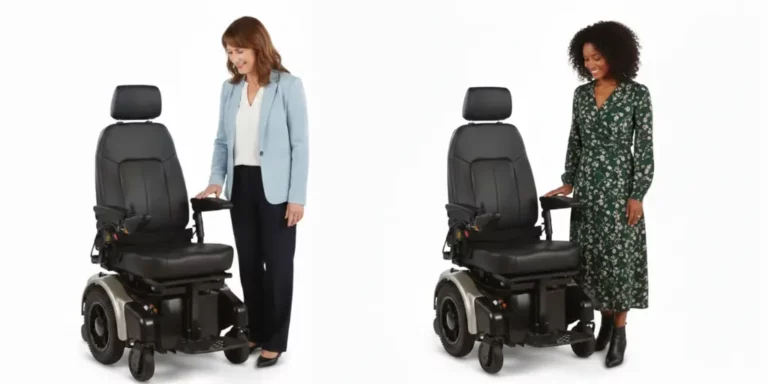
Standard power chairs are essentially “out-of-the-box” solutions. They are intended for users who can sit upright without specialized support but lack the strength to use a walker or manual wheelchair.
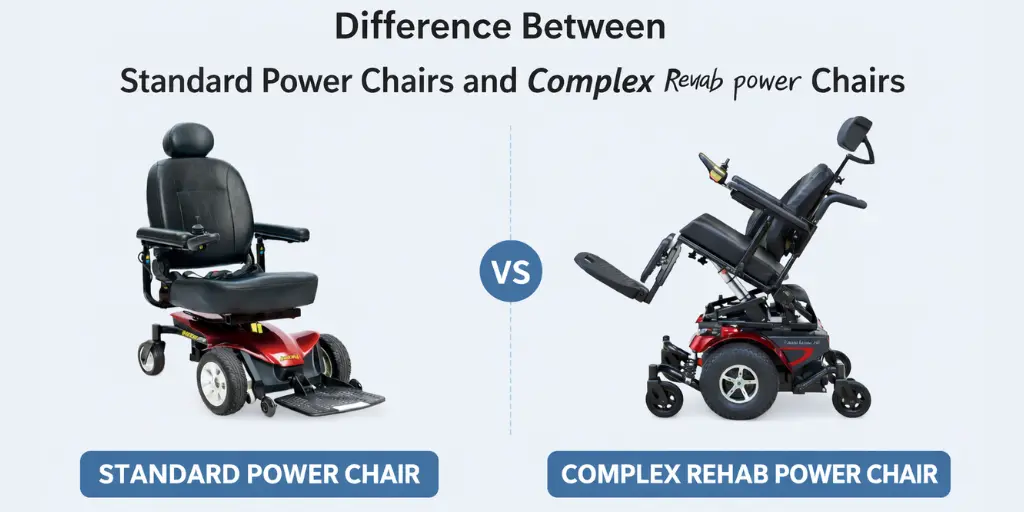
- Seating: Most feature a “captain’s seat” (similar to a car seat) with limited adjustability. While comfortable, these seats do not provide medical-grade pressure relief or postural alignment.
- Controls: Navigation is almost exclusively handled by a basic joystick mounted on the armrest.
- Use Case: These are excellent for seniors or individuals with general weakness who need a reliable powered wheelchair to navigate a kitchen or living room.
- Portability: This category includes the lightweight folding electric wheelchair, which is designed for easy transport in a standard vehicle.
Complex Rehab Power Chairs: Medically Tailored
Complex rehab power chairs are classified as Group 3 or Group 4 mobility devices. Unlike standard models, these are “prescriptive” pieces of equipment where every component—from the cushion to the joystick—is chosen specifically for the user.
1. Advanced Power Seating
CRT chairs are the only models that can accommodate advanced seating functions. This includes power tilt and recline, which are vital for pressure relief and preventing skin breakdown. These chairs can also feature seat elevators to assist with transfers and standing functions to improve circulation.
2. Specialized Drive Controls
If a user cannot use their hands, a complex chair can be fitted with alternative “access devices.” This includes head arrays, chin controls, or sip-and-puff systems. Standard chairs do not have the electronics necessary to support these specialized drive controls.
3. Custom Positioning
For individuals with scoliosis, muscle spasticity, or neuromuscular diseases like ALS or MS, CRT chairs allow for custom-molded backs and lateral supports. This ensures proper skeletal alignment and can even improve respiratory function.
For a deeper look at how advanced seating can protect your health, read our guide on the clinical power tilt and recline benefits for complex rehab users
Which One Does Medicare Cover?
The path to obtaining medicare approved power chairs depends on your clinical documentation.
- Medicare and Standard Chairs: They will typically cover a Group 1 or Group 2 standard chair if you have a “mobility deficit” that prevents you from performing activities like bathing or dressing.
- Medicare and Complex Rehab: To qualify for a Group 3 complex rehab power chair, you must have a neurological condition, a myopathy, or a congenital skeletal deformity. Because these chairs are significantly more expensive, Medicare requires a specialty evaluation to prove that a standard chair would not meet your medical needs.
Comparison at a Glance
| Feature | Standard Power Chair | Complex Rehab Power Chair |
|---|---|---|
| Seating Type | Captain’s Chair (Fixed) | Custom Modular Seating |
| Positioning | None to minimal | Power Tilt, Recline, Elevate, Stand |
| Drive Controls | Standard Joystick Only | Alternative/Specialty Controls |
| Diagnosis | General weakness / COPD | ALS, MS, SCI, Cerebral Palsy |
| Adjustability | Little to none | Highly configurable and expandable |
Find Your Mobility Solution
Unsure which category fits your needs? UniversalMed Supply team specializes in both standard and complex rehab technology.
Reach out today to speak with a mobility expert and see if you qualify for a medicare-approved power chair.
FAQ: Standard vs. Complex Rehab Power Chairs
Q1: What is the main difference between standard & complex rehab power chair?
A: A standard chair is a fixed, functional device for general mobility, while a complex rehab chair is medically tailored with advanced seating and electronics to manage specific neurological or progressive conditions.
Q2: Does Medicare cover complex rehab power chairs?
A: Yes. To qualify for a Group 3 complex rehab chair, Medicare requires documentation of a neurological condition or skeletal deformity, plus a specialty evaluation to prove a standard chair is insufficient.
Q3: Can I get a power chair with tilt and recline functions?
A: These advanced power seating functions are exclusive to complex rehab power chairs. They are designed for patients who need medical-grade pressure relief and postural support.
Q4: Can I use alternative controls if I cannot use a joystick?
A: Only complex rehab power chairs feature the electronics necessary to support alternative “access devices” like head arrays, chin controls, or sip-and-puff systems.