
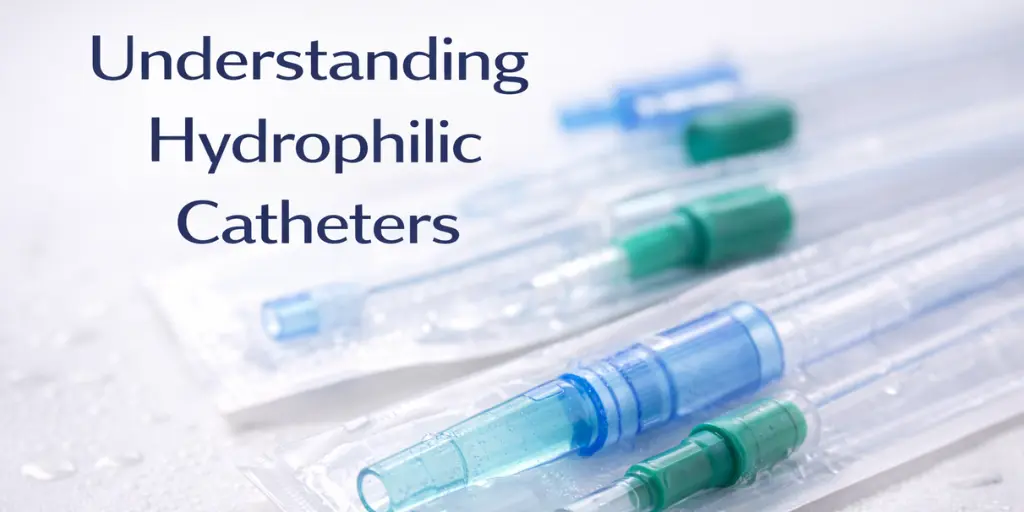
Understanding Hydrophilic Catheters: Why Some Patients Prefer "Ready-to-Use" Options
Key Takeaways
- Frictionless Insertion: Hydrophilic catheters have a specialized polymer coating that becomes ultra-slick when activated by water.
- Reduced Trauma: Because they maintain lubrication throughout the entire process, they significantly reduce the risk of urethral micro-tears.
- Ready-to-Use Convenience: Many modern versions come pre-packaged with sterile water, eliminating the need for messy lubricant tubes.
- Lower Infection Risk: The “no-touch” design of many hydrophilic kits helps prevent the transfer of bacteria from hands to the catheter.
For many men, the transition to intermittent catheterization is a significant lifestyle adjustment. One of the most common hurdles is the discomfort and “stinging” sensation associated with standard PVC catheters and manual lubricants. This is where hydrophilic catheters have transformed patient care. By providing a consistent, bonded layer of lubrication, these “ready-to-use” options offer a smoother experience that many find more comfortable than a standard catheter for men.
What Makes a Catheter "Hydrophilic"?
The term “hydrophilic” literally means “water-loving.” Unlike a traditional catheter that requires you to apply a separate gel, a hydrophilic catheter has a unique coating (often made of polyvinylpyrrolidone) that is chemically bonded to the surface.
When this coating comes into contact with sterile water or saline, it binds the water molecules to the catheter. This creates a thick, slippery, and incredibly smooth layer that stays on the catheter even as it passes through the narrowest parts of the urethra.
Why Patients Choose Hydrophilic Options
While a standard catheter for men is effective, the “Ready-to-Use” nature of hydrophilic technology offers several clinical and lifestyle advantages:
1. Consistent Lubrication:
Manual gel can sometimes “slough off” at the urethral opening, leaving the rest of the catheter dry as it reaches the bladder. A hydrophilic coating stays intact from insertion to withdrawal, ensuring a frictionless experience.
2. Better Long-Term Urethral Health:
For those who catheterize 4–6 times a day, repetitive friction can cause scarring or “strictures.” Because hydrophilic catheters are so slick, they minimize this irritation, preserving the delicate lining of the urinary tract.
3. Discreet and Portable:
If you use an external catheter for men for travel but require intermittent use for drainage, the convenience of a “ready-to-use” hydrophilic is unmatched. You don’t have to carry separate lubricant packets, making it easier to manage your health in public restrooms.
Read our guide on How to Read Your Catheter Prescription to ensure you are reordering the correct size and type of supplies for your routine
Does Insurance Cover Hydrophilic Catheters?
In 2026, insurance providers—including Medicare—recognize the clinical benefits of hydrophilic technology, but they often require specific documentation.
- Criteria for Coverage: To qualify for hydrophilic or “closed-system” catheters, your doctor may need to document that you have experienced frequent Urinary Tract Infections (UTIs), urethral trauma, or have limited hand dexterity that makes manual lubrication difficult.
- HCPCS Coding: These are typically billed under different codes than standard catheters. Ensuring your catheter prescription specifically mentions “hydrophilic” is essential for proper reimbursement.
FAQs: Do I need to add water to a hydrophilic catheter?
Q1: Do I need to add water to a hydrophilic catheter?
A: It depends on the brand. Some come “pre-activated” in a sleeve of sterile water, while others require you to “burst” a small foil sachet of water inside the package before opening. Once the water touches the coating, it becomes instantly slick.
Q2: Are hydrophilic catheters more expensive than standard ones?
A: They generally have a higher retail cost than standard PVC catheters. However, if you meet the medical necessity criteria (such as a history of UTIs or urethral trauma), insurance providers like Medicare often cover them with minimal out-of-pocket costs.
Q3: Can I use a hydrophilic coating on an external catheter for men?
A: No. An external catheter for men (condom catheter) is applied to the outside of the skin and uses an adhesive to stay in place. Hydrophilic technology is strictly for internal (intermittent) catheters to ensure smooth insertion into the urethra.
Q4: How long does the "slippery" coating last?
A: The polymer coating is chemically bonded to the tube, meaning it stays slippery throughout the entire insertion and withdrawal process. Unlike manual gel, it won’t “wipe off” at the opening, providing protection for the entire length of the urethra.
Q4: Can hydrophilic catheters reduce my risk of Urinary Tract Infections (UTIs)?
A: Yes. Many hydrophilic options are “no-touch” kits. They allow you to guide the catheter for men into the bladder using a protective sleeve, which prevents bacteria from your hands or the environment from contaminating the sterile tube.