Power Wheelchair vs. Manual Wheelchair: Which is Right for You?
The decision between a power wheelchair (or motorized wheelchair) and a manual wheelchair is perhaps the most significant choice an individual will make about their mobility equipment. This choice is not just about preference; it involves weighing physical capability, lifestyle, environment, and financial considerations.
The right device will maximize your energy conservation and quality of life. The wrong one could lead to fatigue, pain, and limited mobility.
Key Takeaways
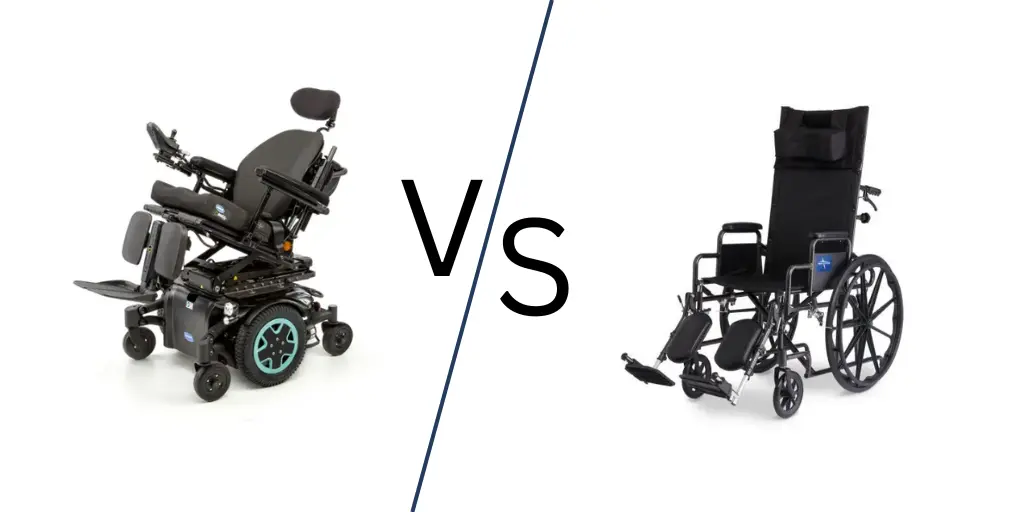
- Manual Wheelchair: Best for users with reliable upper body strength and those who need a portable, affordable, and easily maintained solution.
- Power Wheelchair: Essential for users with limited strength or endurance, or those who need advanced seating features for pressure relief over long distances.
- Insurance Criteria: The key to obtaining a power wheelchair is proving you are medically unable to safely operate a manual wheelchair inside your home.
The Manual Wheelchair: Agility and Affordability
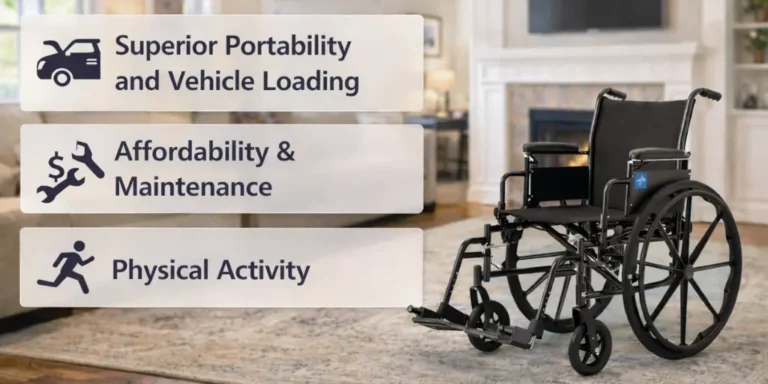
The manual wheelchair is propelled either by the user pushing the hand rims or by an attendant. This option requires physical effort but provides simplicity and superior portability.
Pros:
- Superior Portability and Vehicle Loading: Compared to power chairs, which require specialized vans and heavy-duty lifts, manual wheelchairs offer a high level of logistical freedom. Their streamlined design allows them to be loaded into standard passenger vehicles with ease. This significantly simplifies community access, as users and caregivers can utilize everyday vehicles without the need for expensive modifications or the specialized hitches required for motorized units.
- Affordability & Maintenance: The initial purchase price is significantly lower than motorized options. Furthermore, maintenance is simple—primarily involving tire pressure and cleaning—with very few expensive electronic components to repair.
- Physical Activity: Self-propelling provides beneficial, low-impact upper-body exercise, helping the user maintain muscle tone, cardiovascular health, and greater control over their immediate environment.
Cons:
- Physical Strain & Fatigue: Requires significant and consistent upper-body strength and stamina. This can lead to rapid fatigue over long distances or cause chronic Repetitive Strain Injuries (RSI) to the shoulders and wrists over time, potentially limiting long-term function.
- Terrain Limitations: Propulsion can be extremely difficult on steep inclines, thick carpet, rough sidewalks, or uneven outdoor terrain, often requiring constant assistance.
The Power Wheelchair: Effortless Range and Customization
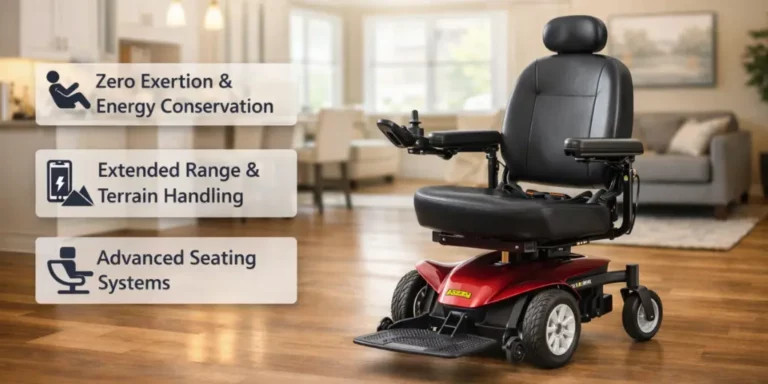
The power wheelchair (or motorized wheelchair) is battery-operated and controlled via a joystick, completely eliminating the need for physical exertion.
Pros:
- Zero Exertion & Energy Conservation: Provides effortless mobility, which is crucial for users with respiratory, cardiac, or fatigue-related conditions. By eliminating the need to push, the user conserves their energy entirely for daily tasks and activities of daily living (ADLs).
- Extended Range & Terrain Handling: Can travel long distances (up to 15-20 miles per charge) and handle moderate inclines, thresholds, and diverse outdoor terrain far more easily than a manual chair.
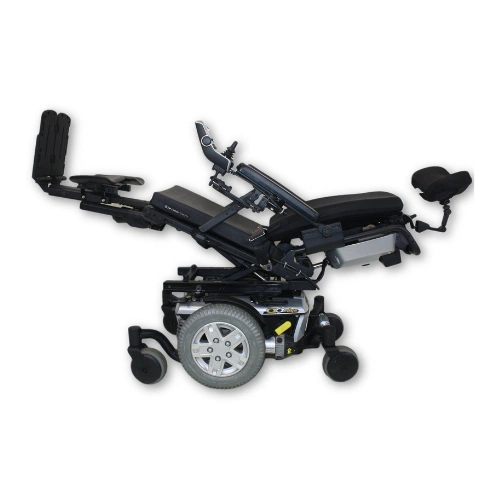
- Advanced Seating Systems: Many models include complex power functions like power tilt and recline. These features are medically necessary for repositioning and achieving pressure relief, which is vital for preventing skin breakdown (pressure ulcers) during all-day use.
Cons:
- Battery Reliance: Requires regular charging and leaves the user immobile if the battery is depleted or if a motor fails.
Insurance Coverage: The Medical Necessity Threshold

The question does Medicare cover wheelchairs? receives a straightforward “yes”—both types are covered as Durable Medical Equipment (DME). However, the complexity arises when justifying the need for the powered device over the baseline manual wheelchair.
The Manual Wheelchair Baseline
The standard manual wheelchair is a primary mobility solution covered by Medicare, provided it is deemed medically necessary for use inside the home. This establishes the coverage threshold for Medicare approved manual wheelchairs. Coverage for this device is generally approved unless the user’s condition prevents safe or efficient self-propulsion.
Securing Power Wheelchair Coverage
The path to obtaining a powered device is much more rigorous than for a manual one. The primary barrier is providing clinical proof that the baseline manual wheelchair is insufficient for your needs. To get power wheelchairs covered by Medicare, you must demonstrate that you cannot safely operate a manual chair due to significant limitations in strength, coordination, or endurance.
A key part of this process is the comprehensive mobility evaluation. This is not a standard check-up; it is a specialized appointment where a physician or a physical/occupational therapist assesses your ability to perform daily activities. This evaluation is the foundation of the documentation that determines if you can receive medicare power wheelchairs.
For individuals seeking medicare approved power wheelchairs or power wheelchairs approved by medicare, this evaluation must explicitly justify why a powered device is necessary for daily tasks inside the home. To get medicare approved power chairs covered, the clinical report from this evaluation must be submitted alongside the physician’s prescription.
At UniversalMed Supply, we can help streamline this daunting process and paperwork for you and your doctors office. To learn more check out out power wheelchairs page.
Power Wheelchair vs. Manual Wheelchair FAQ
Q1: What is the most significant difference in maintenance and cost between a Power Wheelchair vs Manual Wheelchair?
A: The manual wheelchair is significantly less expensive upfront and requires simple, low-cost maintenance (like tires). The power wheelchair has a substantial initial cost, plus expensive long-term maintenance, including complex diagnostic repairs and the eventual replacement of costly batteries and motors.
Q2: Which option is best for a user dealing with chronic fatigue or a respiratory condition?
A: A power wheelchair is essential for users dealing with chronic fatigue, respiratory issues, or cardiac conditions. It requires zero physical exertion, allowing the user to conserve energy entirely for essential daily tasks (ADLs), which is crucial for overall health management.
Q3: How does Medicare decide to approve a power wheelchair over a manual one?
A: The insurance criteria are strict: Medicare must first verify the user’s need for a manual wheelchair inside the home. To approve a power wheelchair, the patient must provide specific documentation from a physician proving they are medically unable to safely or efficiently operate a manual chair due to limited strength or endurance.
Q4: What is the main benefit of the advanced seating in a power wheelchair?
A: Power chairs often feature advanced functions like power tilt and recline. These systems are medically necessary to frequently reposition the user, which prevents dangerous pressure buildup and helps maintain skin integrity, minimizing the risk of pressure ulcers (bedsores).
Q5: Why is portability a major concern when choosing a power wheelchair vs manual wheelchair?
A: Manual wheelchairs are highly portable, easily folding to fit into a car trunk. Power wheelchairs, however, are heavy (often over 250 lbs) and bulky, usually requiring a specialized vehicle lift or a wheelchair-accessible van for transportation, significantly limiting spontaneous travel.