Qualifying for a Power Wheelchair: What Your Doctor Needs to Document
Key Takeaways
- The “Rule of the Home”: Insurance primarily covers powerchairs for use inside your home to perform activities like bathing, dressing, and cooking.
- The Face-to-Face Visit: You must have an in-person appointment specifically for a “mobility evaluation” within a certain timeframe (usually 45–90 days) before the order is placed.
- The Ladder of Mobility: Your doctor must explain why “lesser” devices—like a cane, walker, or manual wheelchair—are not sufficient for your needs.
- Objective Data is King: Vague terms like “weakness” aren’t enough; doctors must use measurable data like muscle strength grades (e.g., 3/5 strength) or oxygen saturation levels.

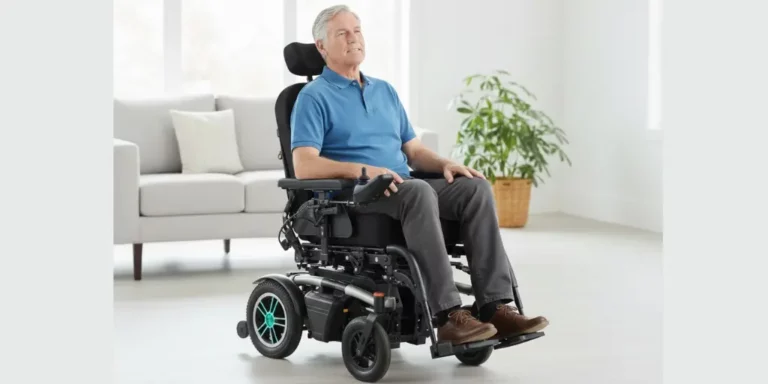
Getting a power wheel chair covered by insurance isn’t just about having a diagnosis; it’s about the “story” told in your medical records. For insurance providers to approve a high-cost item like a powered wheelchair, your doctor must provide specific, objective evidence that it is a medical necessity for your daily life at home.
Below is a guide on the critical elements your doctor needs to document to ensure your claim is successful.
The "Must-Have" List for Your Doctor’s Notes
To secure insurance for power wheelchairs, your physician’s chart notes must paint a clear picture of your functional limitations. Here is what they need to document:
A. Impairment of MRADLs – MRADL stands for Mobility-Related Activities of Daily Living. Your doctor must state that your condition prevents you from safely performing tasks like toileting, feeding, dressing, grooming, and bathing within your home. They must document that the power wheel chair will significantly improve your ability to do these things.
B. Why a Manual Chair Isn’t Enough – This is a common hurdle. Your records must explain why you cannot self-propel an optimally configured manual wheelchair. Reasons often include:
- Limited upper extremity strength or range of motion.
- Severe pain in the shoulders or wrists.
- Extreme fatigue or shortness of breath (COPD/CHF) triggered by physical exertion.
C. Physical & Cognitive Ability – Insurance needs to know you can safely operate the device. The doctor must confirm that you have the mental clarity to use a joystick and the physical stability to sit upright. If you require a heavy duty power chair due to weight or specific postural needs, the doctor must document your current height and weight to justify that specific model.
The Medicare Timeline (2026 Requirements)
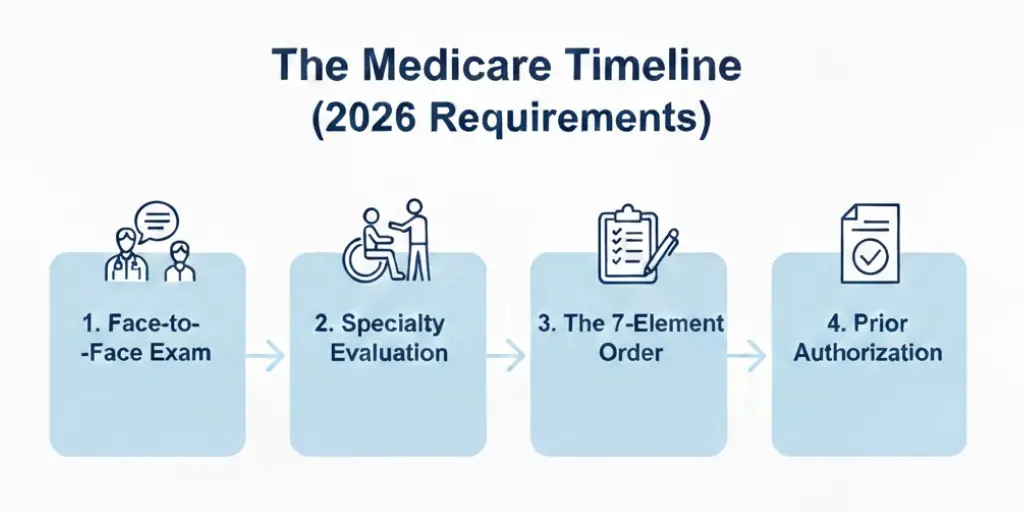
If you are using insurance for power wheelchairs through Medicare, the process follows a strict timeline:
- Face-to-Face Exam: A dedicated visit with your treating physician to discuss your mobility limitations.
- Specialty Evaluation: Often, Medicare requires an additional evaluation by a Physical or Occupational Therapist (PT/OT) who has no financial tie to the wheelchair supplier.
- The 7-Element Order: After the exam, your doctor must write a formal prescription (often called a “Standard Written Order”) that includes your name, the device description, the diagnosis, and the doctor’s signature.
- Prior Authorization: For many powerchairs, the supplier must submit all this documentation to Medicare for “Prior Authorization” before the chair can even be delivered.
To keep your mobility equipment running smoothly, you can follow our comprehensive guide on Electric Wheelchair Maintenance Tips
Documentation for Specialized Needs
If your condition requires a heavy duty power chair or a model with advanced seating (like tilt and recline), the documentation requirements become even more detailed. The doctor or therapist must explain exactly why a standard chair would be unsafe or clinically insufficient for your skin integrity or respiratory health.
Start Your Evaluation Process
Are you ready to see if you qualify for a powered wheelchair? UniversalMed Supply team can work directly with your doctor to ensure all the necessary documentation is in place. Reach out today for a free insurance coverage consultation.
FAQ: Qualifying for a Power Wheelchair
Q1: What is the "Rule of the Home" regarding insurance coverage?
A: Insurance primarily covers powerchairs for use specifically inside your home. The documentation must show that the device is necessary for you to perform activities of daily living like bathing, dressing, and cooking within your living space.
Q2: What are MRADLs and why do they matter?
A: MRADLs stands for Mobility-Related Activities of Daily Living. To secure insurance for power wheelchairs, your doctor must document that your condition prevents you from safely performing tasks like toileting, feeding, dressing, grooming, and bathing without the help of a powered wheelchair.
Q3: Why does my doctor have to explain why I can't use a manual wheelchair?
A: This is part of the “Ladder of Mobility.” Your medical records must prove why “lesser” devices, such as a manual wheelchair, are insufficient. Reasons can include limited upper body strength, severe joint pain, or extreme fatigue/shortness of breath triggered by physical exertion.
Q4: What is the "Face-to-Face" visit requirement?
A: You must have an in-person appointment with your physician specifically for a “mobility evaluation.” For Medicare (2026 requirements), this visit usually needs to happen within 45–90 days before the equipment order is placed.
Q5: How do I qualify for a heavy duty power chair?
A: If you require a heavy duty power chair, your doctor must provide detailed documentation justifying the specific model. This includes recording your current height and weight, as well as explaining why a standard chair would be unsafe or clinically insufficient for your needs.
Q5: What is Prior Authorization?
A: For many powerchairs, the equipment supplier must submit all of your doctor’s documentation—including the face-to-face exam and the 7-element order—to insurance for approval before the chair can be delivered to you.