Traveling with CPAP: Tips for Using Your Machine on Airplanes and in Hotels
Key Takeaways
- FAA Approval: Almost all modern CPAP machines are FAA-approved for use during flights, but you must check for the specific label on the bottom of your device.
- The “Medical Bag” Rule: A CPAP machine does not count as a carry-on item; it is a medically necessary device that flies for free in the cabin.
- Distilled Water Strategy: Since you can’t carry large bottles of distilled water through security, learn how to source it at your destination or use temporary alternatives.
- Power Preparedness: Pack a universal power adapter and an extension cord, as hotel outlets are rarely placed conveniently next to the bed.
Travel should be a source of adventure, not a cause for sleep deprivation. For those reliant on sleep therapy, the prospect of hauling a machine through security and onto a plane can feel daunting. However, with the right packing strategy and a clear understanding of your rights as a passenger, you can maintain your health and energy throughout your journey. Whether you are navigating a red-eye flight or a week-long hotel stay, your CPAP can be as mobile as you are.
Navigating the Airport and Airplanes
Your CPAP is considered “Durable Medical Equipment” (DME), which grants you specific protections under the law.
1. Security Checkpoints (TSA)
You will need to take your CPAP out of its carrying case for X-ray screening, similar to a laptop. To keep it hygienic, place the machine in a clear plastic bag before putting it in the bin. You can also request that the agent wear fresh gloves if they need to perform a physical inspection.
2. In-Flight Use
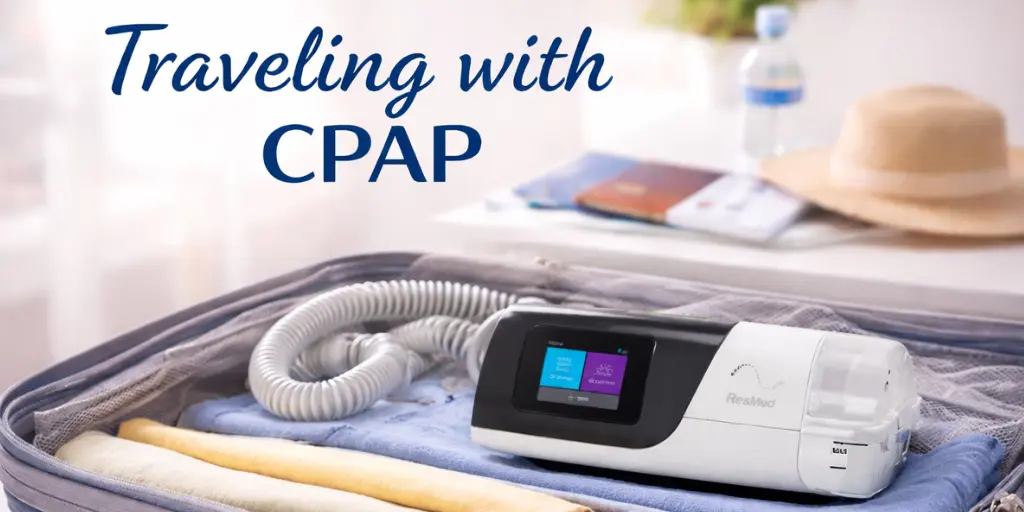
If you plan to use your machine on a long-haul flight, notify the airline at least 48 hours in advance. While many planes have power outlets, they are not always guaranteed to work. Carrying a portable CPAP battery is the most reliable way to ensure uninterrupted sleep therapy at 30,000 feet.
Hotel Stays: Setting Up for Success
Once you arrive at your destination, a few quick adjustments will ensure your machine performs just as well as it does at home.
- Extension Cords are Vital: Hotels often have outlets behind heavy headboards or across the room. A 6-foot to 10-foot extension cord is a travel essential.
- The Water Dilemma: You cannot put tap water in your humidifier, as the minerals will cause buildup. Most pharmacies and grocery stores carry distilled water. If you are in a pinch, bottled “purified” water is a better temporary alternative than tap water, but return to distilled as soon as possible.
- Preventing Rainout: Hotel rooms are often kept colder than your home. To avoid water in your mask, use a hose cover or a heated tube to manage the temperature.
Read our guide on the Best CPAP Mask for Side Sleepers to find a low-profile design that prevents leaks caused by your pillow
Insurance and Travel Supplies
Before you leave, ensure your equipment is in peak condition to avoid mid-trip failures.
- Check Your Filters: Travel environments (especially planes) can be dusty. Start your trip with a fresh filter and bring two spares.
- Replacement Parts: Pack an extra mask cushion and headgear. A broken silicone seal can ruin a trip if you don’t have a backup.
- Documentation: Carry a copy of your CPAP prescription and a “Medical Necessity” letter. This helps if you need to buy emergency supplies at a local clinic or explain the device to customs officials.
FAQ: CPAP Travel Tips
Q1: Does my CPAP count as one of my carry-on bags?
A: No. Under the Americans with Disabilities Act (ADA) and FAA regulations, a CPAP is a medical device and does not count toward your carry-on or personal item limit.
Q2: Should I empty the humidifier water chamber before flying?
A: Yes. Never travel with water in the chamber. It can leak into the motor of your machine, causing permanent damage that is usually not covered by warranty.
Q3: Can I use a travel-sized CPAP machine?
A: Travel CPAPs are excellent because they are smaller and often don’t require a water chamber (using HME filters instead). Check with UniversalMed Supply to see if your insurance covers a second, travel-specific device.
Q4: How do I handle international power outlets?
A: Most CPAP machines have “universal” power bricks (100–240V). You will only need a physical plug adapter for the country you are visiting, not a voltage converter.
Q4: Is it safe to run my CPAP on a cruise ship?
A: Absolutely. Most cruise lines will even provide distilled water and extension cords if you request them in their “Special Needs” form before sailing.